 (732) 440-1760
  3415 Sunset Avenue, Ocean, NJ 07712

The Residential Real Estate Rule (RRE Rule) is a sweeping federal anti‑money‑laundering regulation published in August 2024 and scheduled to take effect March 1, 2026 after a postponement from December 2025.
FinCEN introduced the rule to combat illicit finance, money laundering, and anonymous real‑estate ownership, replacing years of temporary Geographic Targeting Orders with a permanent, nationwide mandate.
What the Rule Requires
Under the RRE Rule, certain professionals involved in closings must file a Real Estate Report (RER) for qualifying transactions. This includes title companies, settlement agents, escrow officers, and closing attorneys.
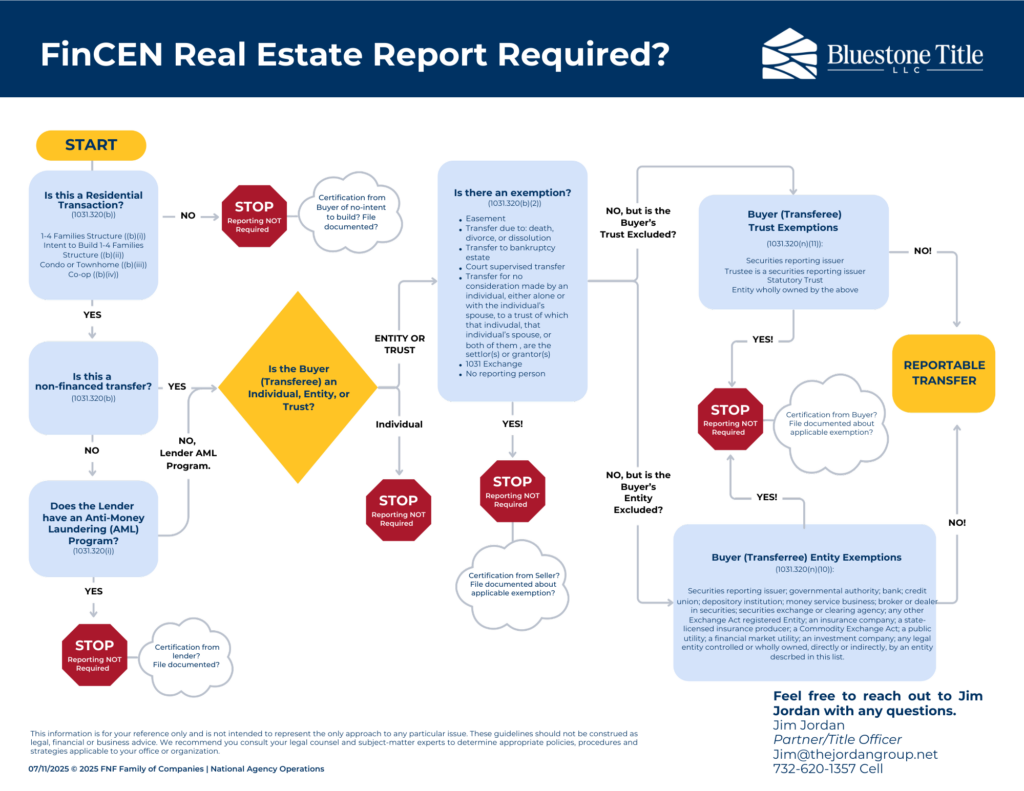
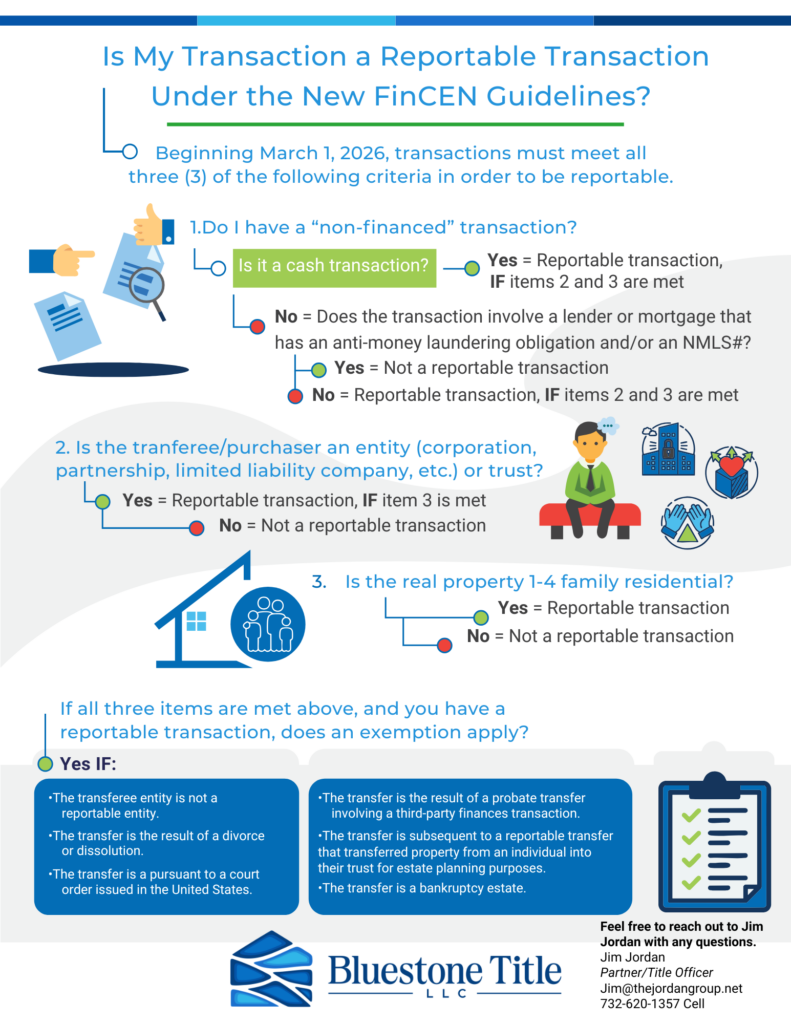
A transaction is reportable if all of the following are true:
The property is residential real estate.
This includes 1‑4 family homes, condos, co‑ops, townhouses, and vacant land intended for residential construction.
The buyer is a legal entity or trust.
Examples: LLCs, corporations, partnerships, estates, most trusts.
The transfer is non‑financed.
Meaning no loan from a regulated financial institution with AML requirements. Covered examples include:
- All‑cash transactions
- Seller financing
- Private/hard‑money financing from non‑AML‑regulated lenders.
There is no minimum purchase price.
Any amount, including transfers with no consideration (gifts), can trigger reporting.
What Title Companies Must Report
The Real Estate Report is extensive and must be filed through FinCEN’s BSA E‑Filing system.
Required details include:
- Property information (address, legal description)
- Buyer entity or trust details
- Beneficial owners (individuals with ≥25% ownership or substantial control)
- Documents for beneficial owners to include name, date of birth, residential address, citizenship, TIN
- Seller information
- All payment details (type, account sources, etc.)
- Identities of signers acting on behalf of entities or trusts.
- The reporting person’s full legal name, cascade role, U.S. business address
- Date of closing
Who Can Access Real Estate Reports
Real Estate Reports will be maintained by FinCEN in a secure database along with other Bank Secrecy Act (BSA) reports and, like any other BSA report, will be subject to strict limits on use and re-dissemination. Real Estate Reports will not be accessible to the general public.
Real Estate Reports are exempt from disclosure under the Freedom of Information Act (FOIA).
When The Real Estate Report Is Due
A Real Estate Report must be filed for any reportable transfer with a closing date occurring on or after March 1, 2026. Reporting persons are not required to report transactions that meet the definition of a “reportable transfer” and that close prior to
A Real Estate Report must be filed by the last day of the month following the month in which the date of closing occurred or 30 calendar days after the date of closing, whichever is later.
Penalties For Not Reporting
Negligent violations of the rule could result in a civil penalty of, as of 2025, not more than $1,430 for each violation, and an additional civil money penalty of up to $111,308 for a pattern of negligent activity. Willful violations could result in a civil penalty of not more than the greater of the amount involved in the transaction (not to exceed $286,184) or $71,545.
There is no exception from reporting under the final rule should a transferee fail to cooperate in providing information about a reportable transfer. The final rule does not authorize the filing of incomplete reports, and a reporting person who fails to report the required information about a reportable transfer could be subject to penalties.
Helpful Links
At Bluestone Title, we protect property rights, securing family legacies and building confidence in every real estate transaction. Our longevity and reputation are not just the result of over 40 years in business. They are the product of a relentless commitment to innovation, client service, and operational excellence.